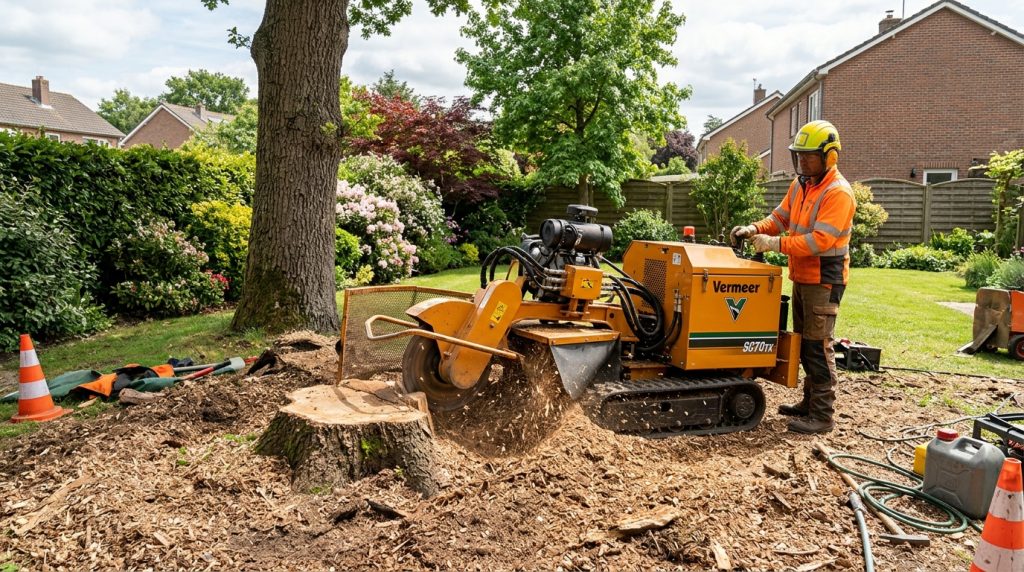
A tree stump is only the visible remnant of a much larger structure. Beneath the lawn, thick roots may extend in several directions, crossing planting beds, compacting soil or complicating plans for a patio, pathway or new tree. A professional stump removal service uses a rotating cutting wheel to reduce the stump and selected roots into wood chips, working below ground level while taking care to limit disruption to the surrounding area.
Assessment before below-ground stump grinding
Before work begins, the service provider examines the stump’s size, position and accessibility, along with nearby structures, paving and plants. Underground utilities and irrigation lines must also be considered, since a cutting wheel can damage buried infrastructure if their locations are not known. Utility-marking procedures and a clear work area help the operator plan a safer route.
The required depth depends on what comes next. A lawn may need a different finish from a garden bed or a site prepared for construction; grinding deeper than necessary can disturb more soil, while stopping too close to the surface may leave wood that interferes with later work. For broader planning around removing a tree and reducing future landscape issues, consult this guide to complete tree removal and landscape planning.
Equipment and site protection
A stump grinder has a powerful rotating wheel fitted with cutting teeth. Depending on the site, a specialist may use a compact machine for a confined yard or larger equipment where access and ground conditions allow. Barriers and protective measures help contain flying chips, and the operator keeps people and pets away from the work zone.
Access matters because machines may need to pass through gates or across finished surfaces. A careful assessment considers the route in and out as well as the stump itself, helping avoid unnecessary damage to lawns, borders and paving. The preparation sets the limits for efficient grinding.
Grinding roots below the soil surface
Once the site is prepared, the operator moves the cutting wheel across the stump in controlled passes, gradually reducing the wood to chips. The machine works down to the specified depth, then may be repositioned to address lateral roots that are raised, exposed or likely to obstruct the planned use of the ground. This is the practical meaning of below-ground grinding: cutting wood beneath the former ground line, rather than simply shaving the stump flush with the lawn.
Not every root needs to be chased to its furthest point. Large roots can spread well beyond the stump, and removing them all may require extensive excavation that disturbs soil and nearby plants. Root grinding therefore focuses on material that affects the surface or the intended project; full root system removal is a different, more invasive undertaking.
What grinding can and cannot remove
Grinding usually reduces the stump and selected roots in place, leaving the finer root network underground to decay naturally over time. It is not the same as pulling out the entire root system, which may involve digging and cutting over a wider area. Where a major root conflicts with construction or causes a specific obstruction, underground root cutting may be considered after assessing the risk to utilities, nearby trees and structures.
The distinction matters for planning. A clear surface does not mean every buried root has disappeared, and some roots may continue to occupy space as they break down. The table below summarizes common outcomes so the scope can be matched to the land’s next use.
| Approach | Typical result | Common consideration |
|---|---|---|
| Stump grinding | Stump cut into chips below the surface | Depth is selected for the planned finish |
| Root grinding | Accessible or obstructive roots reduced in place | Does not remove every root across the yard |
| Tree root removal | Roots excavated and cut from the soil | Can disturb a wider area and nearby features |
Restoring the ground after root grinding
After cutting, the cavity contains a mixture of wood chips and soil. The operator or property owner may remove some chips, backfill with topsoil, and level the area, depending on whether it will become lawn, a planting bed or part of a larger land clearing project. Because chips can settle as they decompose, a small amount of later topping-up may be needed to keep the surface even.
Good yard restoration also takes account of drainage and future planting. Replacing the removed material with suitable soil gives grass or other plants a better foundation than leaving a deep pocket of fresh chips. If the site will support a new tree, its position should be chosen with mature root growth and nearby underground services in mind.
Factors that shape the final result
Soil type, stump condition, access and the planned depth all influence how smoothly the work proceeds. A decayed stump may break down differently from dense, freshly cut wood, while rocky soil can affect the grinding path. Clear communication about the final surface helps the service provider determine whether the job is limited to stump removal or includes nearby root grinding and basic ground preparation.
Before scheduling the work, it helps to clarify a few points with the provider. A defined scope prevents confusion about what “root removal” means and what condition the site will be left in.
- Confirm the planned grinding depth and whether lateral roots are included.
- Identify buried utilities, irrigation lines and other features near the stump.
- Agree on how wood chips and the resulting cavity will be handled.
- Explain whether the area is intended for grass, planting or construction.
For additional perspective on planning tree work around future landscaping, this resource on avoiding landscape problems after tree removal outlines considerations that can complement a stump-grinding plan. Matching the work to the site’s next purpose is what turns a cut stump into usable ground.