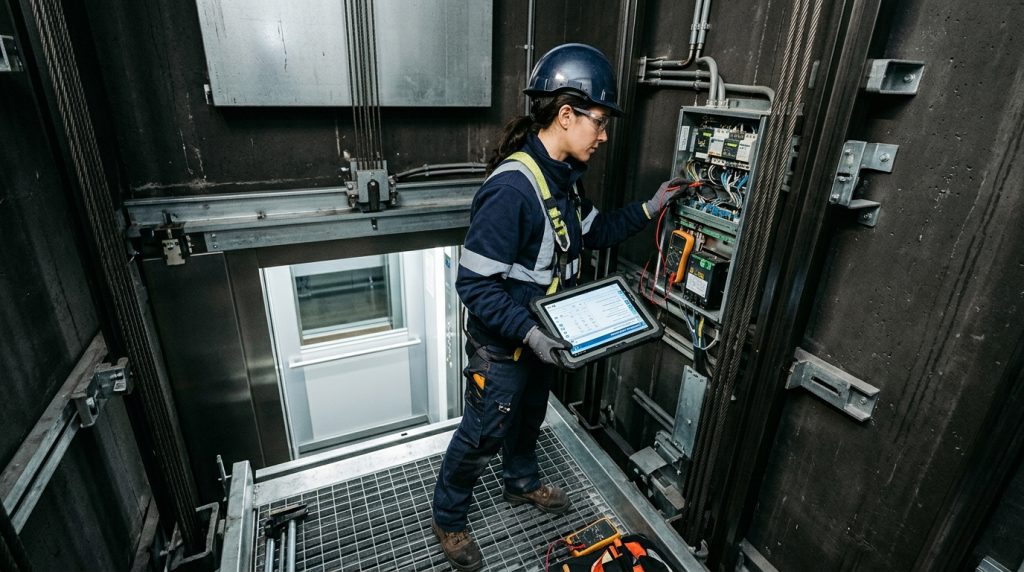
Elevator and lift inspections look beyond whether a car moves between floors. Technicians examine the equipment’s mechanical condition, electrical controls, door operation and emergency features to identify wear or faults that could affect safe, reliable service.
Elevator safety systems and emergency features
The inspection begins with the systems designed to protect passengers and maintenance personnel. Technicians check that safety devices operate as intended, that warning information is visible and that emergency communication can be used when the lift is unavailable or a passenger is trapped.
They may test the emergency alarm, communication equipment, stop switches and other protective functions in accordance with the equipment’s design and local requirements. The condition of safety components is assessed alongside their operation: a feature that responds correctly during a test may still require attention if it shows damage, poor connections or signs of deterioration.
Emergency procedures also depend on clear access to equipment and accurate records. Findings are documented so that outstanding repairs, recurring faults and required follow-up can be tracked rather than overlooked.
Emergency alarms and protective devices
Technicians verify that the alarm and communication system can alert someone outside the elevator and that its controls are accessible. They also inspect relevant safety switches and devices, checking for visible defects and confirming proper response during approved tests.
These checks matter because passengers may depend on the alarm when normal service stops. Reliable communication and functioning protective equipment help ensure that an interruption can be reported and handled appropriately.
Inspection records and safety requirements
Inspection documentation identifies the equipment examined, observed deficiencies and any corrective action required. Owners can use these records to follow up on repairs and coordinate routine servicing; guidance on safety checks that help prevent mechanical failure offers further context on this process.
Requirements differ by jurisdiction and elevator type, so inspection procedures should reflect applicable codes and the manufacturer’s instructions. Accurate records turn individual checks into a meaningful maintenance history.
Mechanical components, cables and brakes
Once safety functions are considered, technicians examine the parts that move and support the elevator car. Their condition can affect smooth travel, stopping performance and the lift’s ability to operate as designed.
The inspection may include cables, brakes, guide rails and components within a hydraulic system, where fitted. Technicians look for wear, damage, leaks, unusual movement and other signs that warrant closer assessment; the precise checks depend on whether the lift is traction-driven, hydraulic or another type.
Cables, brakes and guide rails
For traction elevators, cables are checked for condition and other indicators of wear, while the brakes are assessed for reliable operation. Guide rails are examined for secure mounting, alignment and signs of damage that could interfere with the car’s movement.
These components work together: cables support and move the car, brakes help control and hold it, and guide rails keep its travel aligned. A fault in one area can affect the performance of the system as a whole, which is why technicians assess components in context rather than in isolation.
Hydraulic system and operating performance
In hydraulic lifts, technicians examine relevant equipment for leaks, deterioration and abnormal operation. They may also observe how the car travels and stops, since changes in performance can point to a developing mechanical or control issue.
Routine service helps building managers respond to wear before it leads to a larger disruption. Information about elevator maintenance, repairs and modernization can help clarify how inspection findings relate to ongoing care.
Doors, leveling accuracy and control panel
Passenger-facing operation is another major part of an inspection. Technicians observe the doors, floor stopping position and control panel because these features influence both everyday usability and safe access to the car.
A lift that travels normally may still need adjustment if its doors do not respond consistently or its floor stops are uneven. The following checks help identify these issues and distinguish normal operation from signs that service is needed.
Doors and leveling accuracy
Technicians check that doors open and close smoothly, respond to their safety devices and do not show damage or obstruction. They also assess leveling accuracy—how closely the elevator car aligns with the landing floor—because a noticeable height difference can create a tripping hazard.
Door behaviour and floor alignment are assessed during operation, not just by looking at components while the lift is stationary. Repeated irregularities may signal a need for adjustment or further diagnosis.
Control panel and load capacity
The control panel is checked for responsive buttons, clear indicators and signs of damage. Technicians may also confirm that the stated load capacity information is present and that the elevator operates appropriately under approved test conditions.
Inspection does not mean exceeding rated limits; testing must follow suitable procedures. Clear controls and accurate capacity information help users operate the lift as intended and alert building staff to potential problems.
| Inspection area | What technicians examine | Why it matters |
|---|---|---|
| Doors | Movement, condition and safety-device response | Supports safe entry and exit |
| Travel and stopping | Leveling accuracy and operating behaviour | Helps identify uneven landings or irregular travel |
| Controls | Control panel, indicators and capacity information | Promotes clear and appropriate operation |
When inspection results indicate recurring faults or aging equipment, the next step may involve planned maintenance or a broader assessment of the lift’s future needs. Advice on elevator modernization and replacement considerations can help frame those decisions, while a qualified elevator professional can interpret findings for the specific equipment.
From emergency alarms to cables, doors and controls, a thorough inspection considers how individual parts perform together. Building owners should arrange inspections and follow up on reported defects with a qualified elevator professional for equipment-specific advice and specialized intervention.